
Foreign portfolio investors (FPIs) infused Rs 22,615 crore into Indian equities in February, marking the highest monthly inflow in 17 months, driven by factors such as the interim India-US trade deal, correction in domestic market valuations, and strong corporate earnings.

Ask rediffGURU and tax expert Mihir Tanna your income tax-related questions.

Equity investors became richer by Rs 5.66 lakh crore as markets bounced back sharply on Tuesday following a recovery in global equities. The 30-share BSE Sensex jumped 1,276.66 points or 2.25 per cent to settle at 58,065.47 points. During the day, it zoomed 1,311.13 points or 2.30 per cent to 58,099.94 points. The market capitalisation of BSE-listed firms climbed Rs 566,318.84 crore to Rs 273,92,739.78 crore.

'We are profoundly energy-dependent on the Gulf. That dependency must now be redirected towards the United States, because we require American permission to procure oil.' 'We additionally require Iranian permission to acquire oil from that source. So India now has to seek two separate permissions merely to secure its energy supply.' 'Should we be compelled to source from America, or from Venezuela -- which is, in effect, American-controlled supply -- that will inevitably carry a price premium, an elevated shipping cost, and a considerably extended delivery timeline, given the distances involved.'

Increased input costs due to geopolitical conflict in West Asia and unseasonal rain in March negatively impacted volumes of consumer durables makers, particularly air conditioners, in Q4FY26, leading to projected declines in EBITDA and APAT despite revenue growth.

What we will not do is discount deeply, neither will we compromise on product substance, says Managing Director and Chief Executive Officer (MD&CEO) Santosh Iyer.

Net inflows into equity mutual funds (MFs) moderated for the second straight month in September, declining 9 per cent during the month to Rs 30,422 crore. The slowdown came as redemptions from active equity schemes rose 30 per cent month-on-month (M-o-M) to a one-year high of around Rs 36,000 crore.

With domestic markets turning choppy, investors are increasingly scouting for opportunities overseas to diversify portfolios and hedge against a weakening rupee.

Plans for big bang reforms in the GST regime by Diwali, the Putin-Trump summit and S&P upgrading India's sovereign credit rating are likely to instil optimism in the domestic equity market in the week ahead, analysts said. Besides, trends in global markets and the trading activity of foreign investors would also impact domestic investors' sentiment.

The Insurance Regulatory and Development Authority of India's (Irdai's) decision to allow insurers to hedge risks through equity derivatives will help them manage market volatility and protect policyholder returns. However, this move is unlikely to alter their investment strategies.

Among Sensex firms, Power Grid, Eternal, Bharti Airtel, Axis Bank and Infosys were the biggest laggards. However, Mahindra & Mahindra, Sun Pharma, Kotak Mahindra Bank and State Bank of India were among the major gainers.

Using a trading terminal is not suitable for all market participants. Before market participants start using a trading terminal, it is important for them to know who really needs a trading terminal and what they can do with it. Here, we will explore who should actually use a trading terminal.

Tata Consultancy Services, Tech Mahindra, Infosys, HCL Tech, Bharti Airtel, Sun Pharma, Bharat Electronics and Trent were the major gainers among Sensex scrips. However, Maruti, Eternal, Kotak Mahindra Bank and Titan were among the laggards.

Domestic mutual funds have infused the highest ever -- Rs 4.84 trillion -- this year amid strong inflows via SIPs.
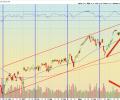
The dollar is king in an intermediate correction, says Sonali Ranade

The domestic initial public offering (IPO) market is experiencing a significant surge, fuelled by the financialisation of savings, digital ease of investing, and expanding participation from both retail and institutional investors, investment bankers said on Wednesday.

India has lost its $5 trillion market capitalisation (mcap) tag following Monday's sharp selloff in equities and a simultaneous slide in the rupee.

The Indian rupee rebounded against the US dollar after the Reserve Bank of India (RBI) restricted banks' net open positions in dollars. This move prompted banks to sell dollars, providing temporary support for the rupee amidst ongoing geopolitical tensions and rising oil prices.
Inflows into equity mutual fund (MF) schemes declined for the third month in a row in March even though the equity market recovered sharply. Equity MF schemes raked in a net Rs 25,082 crore in March, down 14 per cent from February.

In the present hyper-connected world, there are many domestic and global factors that affect financial markets. Of them, the most powerful and often least predictable are geopolitical events, which often boil down to one diplomatic headline.

Rediff.com India Ltd, a subsidiary of AvenuesAI Ltd, has filed draft red herring prospectus (DRHP) with SEBI through the confidential pre-filing route, marking an important step towards a potential public listing after its acquisition and strategic shift to an AI-led digital platform.
Stock investors will track the ongoing conflict between Iran and Israel, Brent crude oil prices, inflation data and the US Fed interest rate decision for further cues this week, analysts said. Tariff-related news would also dictate trends in the equity market, experts noted.

Foreign brokerages remain cautious on the road ahead for the Indian equity markets. Though analysts at Nomura have revised their March 2026 Nifty target to 26,140 levels from the earlier 24,970, but the upside from the current levels is a modest 6 per cent. BofA Securities, on the other hand, has not made any change to its year-end Nifty target.

The exodus of FPIs from the Indian equity markets continues unabated, as they withdrew Rs 64,156 crore ($7.44 billion) this month so far on depreciation of the rupee, rise in the US bond yields and expectation of a tepid earning season. This came after an investment of Rs 15,446 crore in the entire December, data with the depositories showed.

Direct-to-consumer meat and seafood platform Licious is betting big on "micro markets" within cities as the next lever of growth.
Majority of equity fund managers were able to squeeze in some extra returns over their benchmarks in 2024-25 (FY25). While some managed to do so by delivering outsized returns during the equity market rally in the first half of the year (H1FY25), others succeeded by limiting the downside during the market downturn.

Multi-asset allocation funds (MAAFs) have emerged as strong performers among mutual funds (MFs), rivalling medium-term returns from traditional equity categories while maintaining a lower risk profile. Over the past three years, average returns for this segment have surpassed those of flexicap and largecap funds, for both lump sum and systematic investment plan (SIP) investments.

Rupee slumped 69 paise to an all-time low of 92.18 against the US dollar in early trade on Wednesday, as a sharp spike in crude oil prices amid geopolitical tensions following the escalation of the US-Iran conflict weighed on investor sentiment.

Investors should avoid making drastic changes to their asset allocation during a market correction.

From the Sensex firms, State Bank of India, Bajaj Finserv, Bajaj Finance, Maruti, HCL Tech, Larsen & Toubro, Mahindra & Mahindra and Infosys were among the major winners. However, Hindustan Unilever, Eternal, Tata Motors Passenger Vehicles, and Sun Pharma were among the laggards.
Equity mutual fund (MF) schemes were flush with cash at the start of this month, even as fresh investments shrank in February. As of February 28, equity schemes from the top 20 fund houses held 6.8 per cent of their portfolios in cash, up from 6.1 per cent in January and 5.9 per cent in December 2024, according to a report by Motilal Oswal Financial Services.

Among Sensex firms, Eternal, Infosys, Asian Paints, HDFC Bank, Bajaj Finserv and Titan were the major gainers. However, Tata Steel, Tech Mahindra, Adani Ports and Bharat Electronics were among the laggards.

'In FY21, as of October, LIC has booked a profit of Rs 18,800 crore through sale of equities.'

Among Sensex firms, Bharat Electronics, Mahindra & Mahindra, Tata Steel, UltraTech Cement, Bajaj Finserv and Tata Motors Passenger Vehicles were the major laggards. However, Tech Mahindra, Asian Paints, Infosys, Adani Ports, Sun Pharma and HDFC Bank were the gainers.

During the first quarter ended June, 2014-15 fiscal, LIC earned a total premium of Rs 14,016 crore.

Equity benchmark indices Sensex and Nifty rebounded sharply by nearly 1 per cent on Monday, driven by strong buying in power, banking, and financial stocks.

In an event-heavy week ahead, stock markets' movement would highly depend on macroeconomic data announcements, global trends, RBI's interest rate decision and trading activity of foreign investors, analysts said. India's industrial production data for October 2025 will be released on December 1, an official statement said on Friday.

Their assets under management (AUM) rose from Rs 1.04 trillion (January 31, 2025) to Rs 1.75 trillion (January 31, 2026), an increase of 68.3 per cent.

Equity benchmark indices Sensex and Nifty advanced for the third straight session on Tuesday driven by firm global cues and optimism over India-US trade agreement, even as investors turned to profit-booking at higher levels.

Bank lending to companies is expected to go up in the coming quarters because the difference in interest rates between corporate bonds and bank loans has narrowed. In addition, recent policy reforms by the Reserve Bank of India (RBI), including allowing domestic banks to do acquisition financing, are expected to give further support to corporate lending, analysts said.
